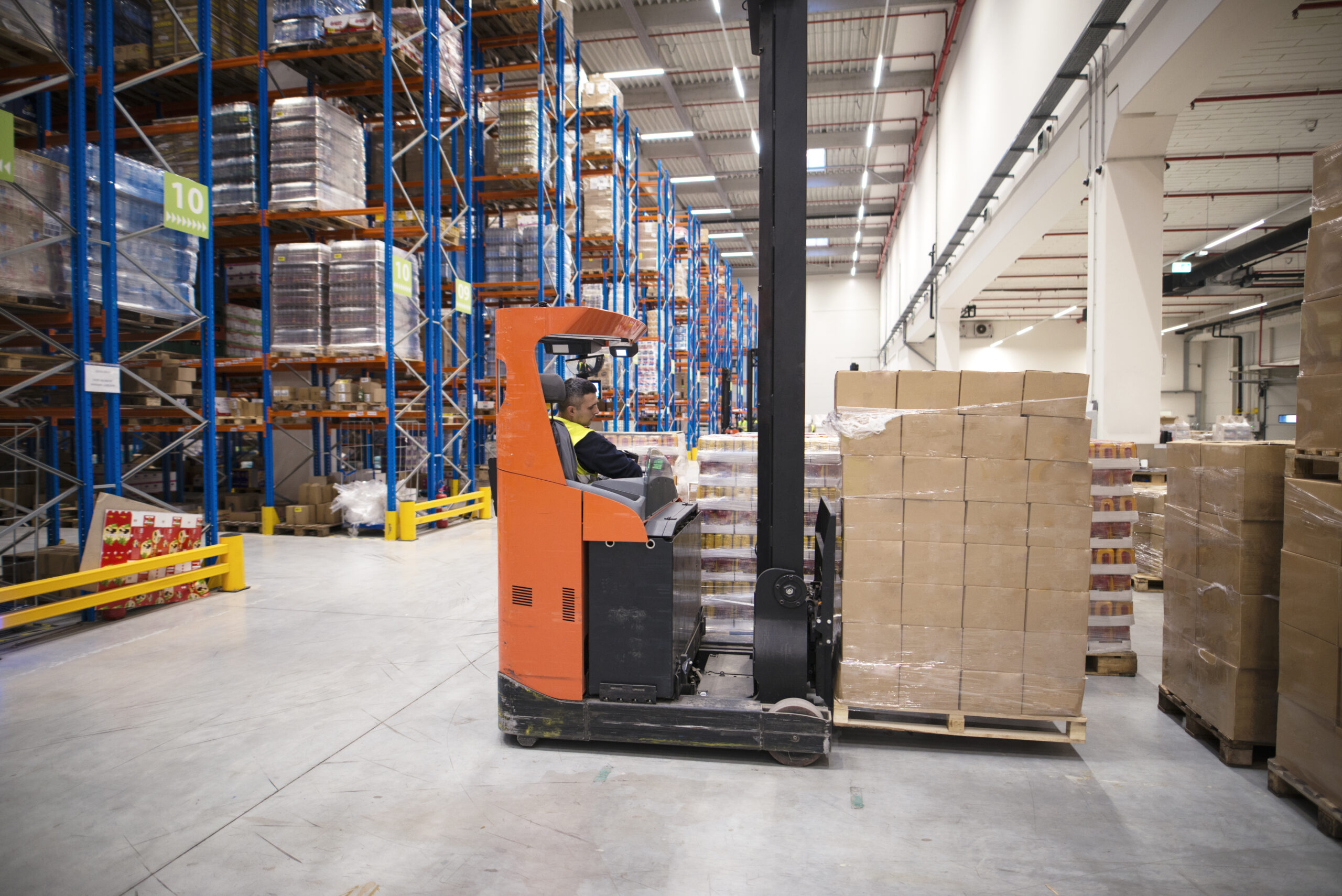
Selecting the right material handling equipment is never just about buying a machine. It affects productivity, safety, energy costs, maintenance schedules, operator comfort, turnaround times and the overall flow of goods through your facility. This is especially true when comparing diesel and electric tow tractor suppliers, because the right choice depends on how your operation works every day.
In South Africa, facilities face a unique mix of pressures.
- Warehouses need tighter turnaround times.
- Manufacturing plants need reliable internal logistics.
- Distribution centres must manage high-volume movement without unnecessary downtime.
Airports, factories, logistics hubs and industrial sites all need tow tractors that can move loads efficiently, safely and consistently.
Johnson Taylor Forklifts understands that every facility has different operational demands. As the exclusive agent for Heli forklifts and equipment in South Africa, we supply a broad range of material handling solutions designed to support demanding local industries. Our range includes diesel and electric tow tractors, forklifts, reach trucks, pallet trucks, stackers, parts, services and rental options. That means we do not simply offer equipment; we help customers choose solutions that fit their environment, workload and long-term operating goals.
What Are Tow Tractors Used For?
Diesel and electric tow tractors are designed to pull trailers, trolleys, carts or load carriers across a facility. Unlike forklifts, which lift and stack loads, tow tractors are primarily used for horizontal movement. This makes them highly effective in environments where goods, components, stock or materials need to be transported repeatedly between departments, production lines, storage areas or dispatch zones.
Common diesel and electric tow tractor applications include:
- Warehouses and distribution centres
- Manufacturing plants
- Automotive assembly facilities
- Airports and cargo handling areas
- Industrial sites
- Retail and wholesale distribution operations
- Logistics yards
- Large production facilities
Tow tractors can improve workflow by reducing manual handling, limiting unnecessary forklift traffic and supporting a more organised internal transport system. They are especially useful where the same route is travelled repeatedly throughout the day.
Diesel vs Electric Tow Tractors: Understanding the Core Difference
When comparing diesel and electric tow tractor suppliers, the first question is usually whether diesel or electric is the better fit. The answer depends on where the tow tractor will operate, how often it will be used, what it will pull and what kind of working conditions it must handle.
- Diesel tow tractors are powered by diesel engines and are typically chosen for outdoor, heavy-duty or longer-shift applications where strong pulling power and quick refuelling are priorities.
- Electric tow tractors use battery power and are often preferred for indoor environments, warehouses and facilities that prioritise lower noise levels, lower emissions at point of use and reduced day-to-day maintenance requirements.
Neither option is automatically “better”. The best choice is the one that matches your operational reality.
When Diesel Tow Tractors Make Sense
Diesel tow tractors are often selected for demanding environments where durability, torque and longer continuous use are important. They are well-suited to outdoor applications, rougher surfaces and operations where charging infrastructure may not be practical.
A diesel tow tractor may be the right fit if your facility:
- Operates mainly outdoors
- Handles heavier towing duties
- Requires long operating hours with quick refuelling
- Works in rugged industrial conditions
- Does not have suitable charging infrastructure
- Needs equipment that can perform reliably across large yards or open sites
For some South African operations, diesel remains a practical choice because it supports longer run times and straightforward refuelling. Facilities that cannot afford charging downtime or that work in areas with limited electrical infrastructure may find diesel tow tractors more practical.
However, diesel machines also require proper ventilation, routine engine maintenance and responsible fuel management. These factors should be considered when assessing the total cost of ownership.
When Electric Tow Tractors Are the Better Fit
Electric tow tractors are increasingly popular in warehouses, distribution centres and production facilities where cleaner, quieter and more efficient operation matters. Because electric models produce no exhaust emissions at the point of use, they are particularly useful indoors or in semi-enclosed environments.
An electric tow tractor may be the right fit if your facility:
- Operates indoors
- Needs quieter equipment
- Wants to reduce fuel dependency
- Has fixed routes and predictable shifts
- Prioritises lower emissions at the point of use
- Has access to charging infrastructure
- Wants to reduce routine engine-related maintenance
Electric tow tractors are also a good match for modern warehouse layouts where manoeuvrability is important. Compact designs can help operators move through tighter spaces, support better traffic flow and reduce congestion in busy working areas.
For businesses focused on long-term sustainability, electric equipment can form part of a broader strategy to reduce environmental impact and improve workplace conditions.
Why Supplier Choice Matters as Much as Equipment Choice
Choosing between diesel and electric tow tractors is important, but choosing the right supplier is just as critical. A tow tractor supplier should help you select the right equipment, support it after delivery and provide practical guidance when your operational needs change.
The right diesel and electric tow tractor supplier should offer:
- Product knowledge across diesel and electric equipment
- Access to quality machines from trusted manufacturers
- Local technical support
- Reliable parts availability
- Maintenance and servicing capability
- Rental and purchase flexibility
- Industry-specific advice
- A national support footprint
This is where experienced diesel and electric tow tractor suppliers stand apart. A supplier should not only sell equipment; they should help protect uptime, reduce unnecessary operational risk and support productivity over the full lifecycle of the machine.
Key Factors to Consider Before Choosing a Tow Tractor
Before investing in a tow tractor, it is important to assess your facility properly. A machine that works beautifully in one operation may not be ideal for another.
Indoor vs Outdoor Use
Indoor facilities often favour electric tow tractors because they are quieter and cleaner at the point of use. Outdoor environments may require diesel tow tractors, particularly where surfaces are rougher or loads are heavier.
If your operation uses both indoor and outdoor routes, the decision becomes more nuanced. You may need to consider route distance, surface condition, ventilation, load weight and shift length.
Load Weight and Towing Requirements
Tow tractors must be matched to the loads they will pull. Underspecifying a machine can lead to excessive strain, safety concerns and premature wear. Overspecifying can result in unnecessary costs.
A good supplier will help assess:
- Average load weight
- Maximum load weight
- Trailer or trolley type
- Surface gradients
- Route distance
- Frequency of trips
- Stopping and turning requirements
This ensures the tow tractor is suited to real working conditions, not just a theoretical capacity figure.
Operating Hours and Shift Patterns
A facility running a single shift may have very different requirements from one running extended or 24-hour operations.
For electric tow tractors, battery runtime and charging schedules must be carefully considered. For diesel tow tractors, fuel access and engine maintenance intervals become more important.
The goal is to choose equipment that supports productivity without creating operational bottlenecks.
Manoeuvrability and Facility Layout
Tow tractors are often used in busy environments where space is limited. Warehouses, production areas and loading zones may have narrow aisles, tight corners or high pedestrian activity.
Compact, easy-to-manoeuvre tow tractors can improve safety and efficiency by helping operators move loads smoothly through restricted spaces. This is particularly important in South African facilities where existing layouts may need equipment that adapts to the building rather than the other way around.
Maintenance Requirements
Maintenance affects uptime, cost and long-term equipment value. Diesel tow tractors generally require engine-related maintenance such as oil, filters and fuel system checks. Electric tow tractors typically have fewer moving engine components, which may reduce certain maintenance requirements.
However, electric models still need proper battery care, charging discipline and routine inspections. The supplier’s ability to service and support the equipment is therefore essential.
Total Cost of Ownership
The purchase price is only one part of the decision. A proper cost comparison should include:
- Fuel or electricity costs
- Maintenance requirements
- Parts availability
- Downtime risk
- Operator training
- Expected lifespan
- Battery or engine servicing needs
- Rental vs purchase options
The cheapest machine upfront is not always the most cost-effective over time. A reliable supplier can help you compare the full picture before committing.
Why Johnson Taylor Forklifts Is a Trusted Choice in South Africa
Johnson Taylor Forklifts supplies material handling equipment that supports South African businesses across multiple industries. Our experience, product range and national footprint allow us to assist customers with practical solutions for real-world operating conditions.
We are proud to be the exclusive agent for Heli forklifts and equipment in South Africa. Heli is recognised globally for dependable material handling equipment, and we combine that product strength with local knowledge, technical support and after-sales service.
Our operations are supported by branches in Johannesburg, Cape Town, Durban and Nelspruit, as well as a dealer network throughout South Africa. This gives our customers access to equipment support beyond a single region, which is especially important for companies operating across multiple sites.
Diesel and Electric Tow Tractor Suppliers With Practical Product Knowledge
As experienced diesel and electric tow tractor suppliers, we understand that choosing the right machine requires more than comparing specifications. We look at the working environment, load movement, facility layout and productivity targets.
Our diesel and electric tow tractors are suitable for facilities that need practical, efficient towing solutions. They are designed to manoeuvre through tight spaces in warehouse environments and support low-maintenance operations with fewer unnecessary repairs when properly matched to the application.
Whether your facility needs diesel strength for tougher conditions or electric performance for indoor movement, we can help guide the decision.
Rental Options for Flexible Facility Needs
Not every business wants or needs to purchase equipment immediately. Some operations need temporary capacity during seasonal peaks, contract work, warehouse expansion or short-term projects.
We offer rental solutions that support different operational needs, including short-term, long-term and ad-hoc rental options. This gives businesses the flexibility to access suitable equipment without always committing to ownership from the start.
Rental can be especially useful when:
- You are testing whether diesel or electric is best
- You need extra equipment during peak periods
- You have a temporary project
- You want predictable access without a full capital purchase
- You are waiting for new equipment delivery
- Your facility needs backup equipment during servicing
This flexibility allows customers to manage productivity while controlling capital expenditure.
After-Sales Support Should Never Be an Afterthought
The quality of after-sales service can make or break a material handling investment. Even the best tow tractor needs proper servicing, parts and technical care to perform reliably.
Johnson Taylor Forklifts supports customers with parts and servicing for Heli machines. Our service force and national dealer network help keep equipment running efficiently, reducing downtime and supporting long-term productivity.
This matters because downtime is expensive. A tow tractor that is unavailable during a busy shift can disrupt production, delay dispatch or create unnecessary pressure on staff and equipment. Reliable support helps protect the flow of work.
Diesel Tow Tractor Supplier Checklist
When assessing diesel tow tractor suppliers, consider whether the supplier can help you answer the following:
- Is the machine suitable for the load weight and operating surface?
- Can it handle outdoor or rugged use?
- Is there reliable local parts support?
- Are technicians available for servicing?
- What maintenance schedule is required?
- Is fuel management practical for the facility?
- Can the supplier support multiple branches or sites?
- Are rental options available if needed?
A diesel tow tractor can be a strong investment when it is properly selected and supported.
Electric Tow Tractor Supplier Checklist
When comparing electric tow tractor suppliers, ask:
- Is the machine suitable for indoor routes and load requirements?
- What battery type and runtime are available?
- How long does charging take?
- Is opportunity charging possible?
- Will the facility need charging infrastructure?
- What maintenance is required?
- Can the supplier support battery care and servicing?
- Is the machine suitable for tight warehouse spaces?
Electric tow tractors can offer excellent operational benefits, but only when battery capacity, charging routines and duty cycles are correctly matched.
Safety and Operator Efficiency
Tow tractors help improve internal transport, but safety remains essential. The right equipment should support clear visibility, controlled movement, operator comfort and predictable handling.
Diesel and electric tow tractor supplier guidance is important because safety is not only about the machine; it is about how the machine fits into the workflow. Routes, pedestrian areas, turning points, trailer coupling, gradients and load stability all need to be considered.
A well-chosen tow tractor can reduce manual strain, streamline movement and improve traffic flow inside a facility. A poorly matched machine can create inefficiencies and unnecessary risk.
The Role of Tow Tractors in Modern South African Facilities
South African facilities are under increasing pressure to work faster, cleaner and more efficiently. Warehouses and production environments must move goods without delays, while also managing energy costs, equipment availability and staff safety.
Diesel and electric tow tractors offer a practical way to improve internal logistics. They can reduce reliance on manual movement, support line-side delivery, improve route efficiency and help create a more structured material handling system.
For companies that are expanding, modernising or reviewing their equipment fleet, choosing between diesel and electric tow tractors is an opportunity to improve the way the entire facility operates.
FAQs About Diesel and Electric Tow Tractor Suppliers
What do diesel and electric tow tractor suppliers provide?
Diesel and electric tow tractor suppliers provide equipment designed to tow trailers, trolleys and load carriers within warehouses, factories, logistics centres and industrial facilities. A good supplier should also assist with product selection, servicing, parts, rentals and after-sales support.
Should I choose a diesel or electric tow tractor?
Diesel tow tractors are often better suited to outdoor, heavy-duty and longer-run applications. Electric tow tractors are usually preferred for indoor environments where quieter operation, cleaner point-of-use performance and lower routine engine maintenance are important.
Are electric tow tractors suitable for South African warehouses?
Yes, electric tow tractors can be highly suitable for South African warehouses, especially where routes are predictable, charging can be planned and indoor air quality is a priority. They are also useful in facilities with tighter spaces and controlled operating environments.
Are diesel tow tractors still a good option?
Yes. Diesel tow tractors remain a practical choice for many outdoor, rugged or high-demand applications. They can be especially useful where fast refuelling and extended operation are required.
What should I look for in tow tractor suppliers?
Look for diesel and electric tow tractor suppliers with proven product knowledge, quality equipment, local technical support, parts availability, servicing capability, rental options and experience in South African material handling environments.
Can I rent a tow tractor instead of buying one?
Yes. Rental can be a practical option for short-term projects, seasonal demand, temporary capacity or businesses that want to test equipment before committing to a purchase.
Why choose Johnson Taylor Forklifts?
We offer Heli material handling equipment, diesel and electric tow tractor options, rental solutions, parts, servicing and national support through our branches and dealer network. Our team helps customers choose equipment suited to their specific facility and operating conditions.
Partner With Johnson Taylor Forklifts for the Right Tow Tractor Solution
Choosing between diesel and electric tow tractor suppliers should not feel like guesswork. The right decision comes from understanding your environment, your load requirements, your shift patterns and your long-term operational goals.
Johnson Taylor Forklifts helps businesses choose material handling equipment that works in the real world. Whether you need diesel durability, electric efficiency, rental flexibility, servicing support or expert guidance on the right machine for your facility, we are ready to assist.
Speak to our team about your diesel and electric tow tractor requirements and let us help you match your facility with equipment that supports safer, smoother and more productive operations.