As a leading supplier of forklifts and material handling equipment in South Africa, we have the answers to all your forklift-related questions.
What is a forklift?
A forklift is a small industrial vehicle with a power-operated forked platform at the front that can be raised and lowered for insertion under a load to lift or move it. Forklifts are used in various industries, including warehouses and large storage facilities.
What are the different types of forklifts?
Electric batteries or combustion engines power forklifts. Some forklifts allow drivers to sit while driving and operating the machine, while others require them to stand. Forklifts are widely used in transporting materials and goods throughout the industry.
Articulated forklifts
When a standard forklift is too large for the job, and more manoeuvrability is required, an articulated forklift can be a useful machine. It has a forked lifting device that can turn right or left independently of the forklift’s body. These forklifts are ideal for loading and unloading trailers in warehouses, smaller spaces, cold storage units, and factories.
Counterbalance forklifts
The counterbalance forklift
is one of the most used lifts in indoor warehouses and factories. It has forks in front and weight on the back to counterbalance the heavy load. The counterbalance forklift is available with three wheels, which allows for greater manoeuvrability. However, four-wheel models offer greater stability and maximum load capacity.
Industrial forklifts
With a maximum carrying capacity of up to 13 tonnes and a high degree of stability due to its size, an industrial forklift can lift a heavier load than a standard forklift. These forklifts combine warehouse and high-capacity lift functionality. Large warehouses benefit from the use of industrial forklifts.
Explosion-proof forklifts
Explosion-proof forklifts are used for jobs that pose a fire risk or explosion. For example, explosion-proof forklifts will be useful in producing, handling, processing, and storing perfumes, cosmetics, printing inks, pharmaceuticals, paints, and rubbers, where various chemicals can cause an explosion or fire.
Marina forklifts
Marina forklifts are useful for lifting and transporting boats into and out of storage depots. These machines’ lifting forks are typically made of rubber to withstand the corrosive nature of seawater on regular metals.
What are forklifts used for?
Forklifts have entirely revolutionised the storage and shipping industries and have become an essential part of the modern industrial world.
Construction sites
Industrial forklifts are extremely useful on construction sites because they can transport heavy building materials over long distances and across rough terrain. It combines and balances the capabilities of a lifting tool and a vehicle. Forklifts can unload and transport pallets of bricks, construction materials, and steel joists from delivery trucks.
Warehouses
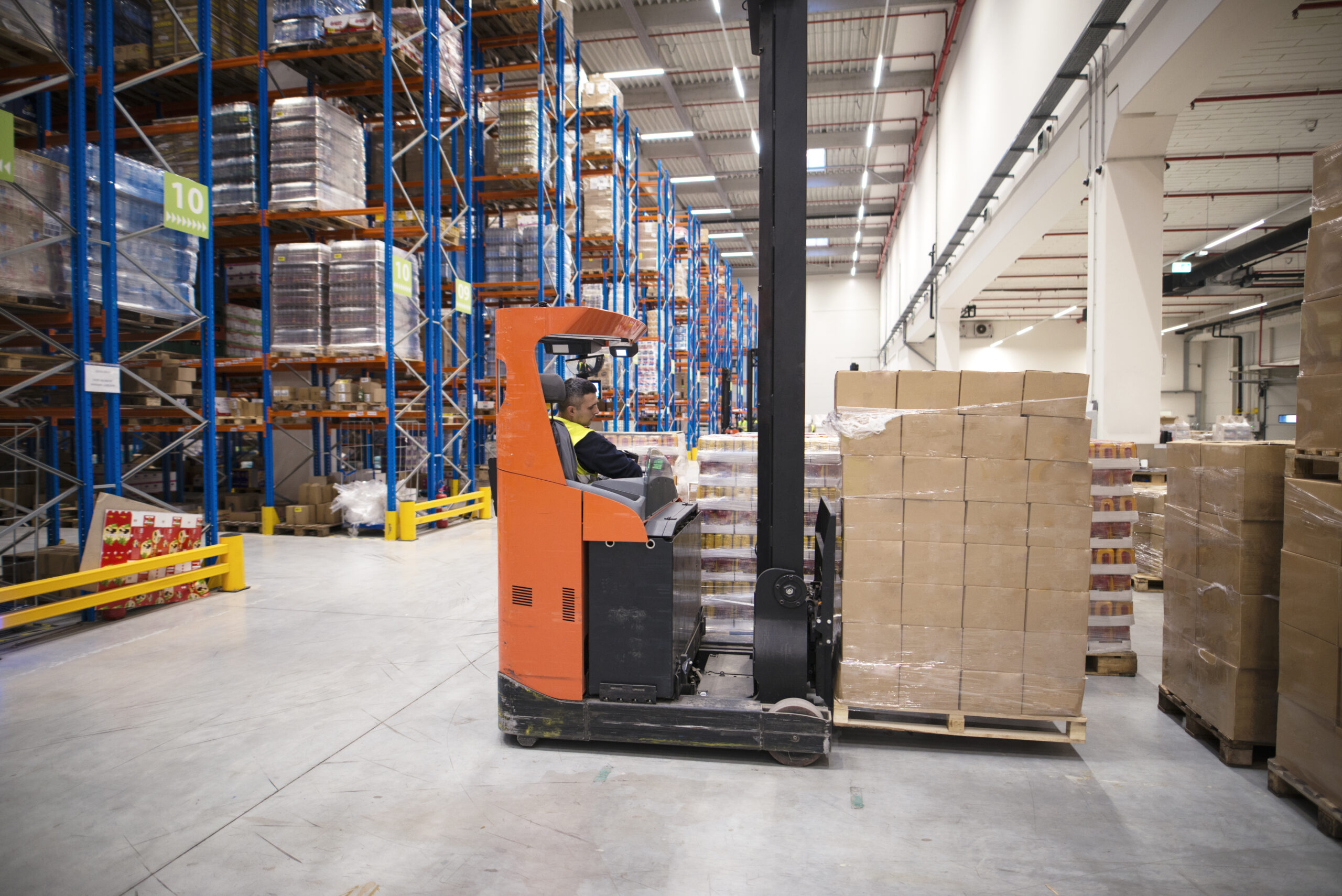
Forklifts are commonly used in warehouses to load and unload trucks and transport goods. Many different types of forklifts are available, ranging from pedestrian-operated machines to heavy-duty driver-operated trucks. A plate determines the forklift’s maximum lifting capacity. Forklift operators can raise and lower the forks, shift loads with side shifters, and tilt the mast to keep the load from sliding off the forks. Pallet trucks are used to unload and stuff goods delivered on pallets, such as cartons and canned goods.
Recycling operations
In recycling operations, forklifts are used to unload recycling trucks or containers and transport their contents to sorting bays. Forklift trucks can easily load and unload straight trucks, tractor-trailers, elevators, and railway cars. In addition, cage attachments can be used to transport materials like tyres that may slide off the forks.
Dockyards
Forklift trucks are used in the stacking and unloading of ships and barges quickly and efficiently. Heavy-duty forklifts can transport large containers from delivery trucks to dockside storage areas and then to ships.
What is the stability triangle?
The stability triangle is an imaginary triangle between the centre of a forklift’s rear axle and both front axle wheels. To understand the stability triangle, you need to consider the following elements:
- Centre of gravity
- Combined centre of gravity
- Load centre
- Load moment
- Load capacity
How high should a load be carried on a forklift?
When travelling with a load, lift the load 10 to 15 cm off the ground. The load must be in the lowest position when transported by industrial forklifts for these reasons:
Improved stability
Because of the movement of the centre of gravity, a forklift is less stable with a raised load. After it is loaded, a forklift’s centre of gravity advances toward the front axle and ascends toward the overhead guard. In addition, the centre of gravity shifts more as the load increases, and if it moves outside of the “stability triangle,” it risks tipping the truck over. Therefore, keeping the load lower aids in keeping the centre of gravity within the zone of stability.
Avoid obstacles
Carrying the load low to the ground helps the operator avoid hitting ground obstacles like concrete expansion joints, uneven areas, slight slopes, debris, and dock plates. Other obstacles that may result in a collision include other forklifts, people, other loads, infrastructure, etc.
Prevent excessive fork wear
Even if the forklift is empty, you should still drive it with the forks off the ground to avoid dragging the forks and wearing them out. Worn-out forks reduce lifting capacity and will necessitate frequent fork replacement.
How do you safely operate a forklift?
It is crucial to properly prepare the load before lifting to improve safety. Preparing a load requires the following steps:
- Arrange and secure the load safely. For example, do not transport loose products. Instead, secure them with banding or wrapping.
- Centre the load. Load the forklift with the heaviest side of the load near the front axle if handling an off-centre load that cannot be centred.
- Don’t overdo it. The rated capacity of your forklift can be found on the nameplate, and it should never be exceeded.
- Follow the rated load centre. The rated load centre will also be displayed on the nameplate of your forklift. Even if the load is within the rated weight capacity, exceeding the specified load centre can cause the forklift to become unbalanced.
Once the load is prepared, it can be lifted. First, the operator should check the clearance for overhead obstructions to ensure the load doesn’t get caught on racking, etc. To safely lift a load:
- Check that your forks are level at a 90° angle before inserting them into a pallet.
- Properly space your forks. When picking up a load, the forks should be inserted at least two-thirds of the way down the load. Also, adjust the forks as wide as possible to provide a more even weight distribution.
- Ensure you have enough overhead clearance, especially if working in a confined space or using a high-lifting truck.
- Raise the load to the appropriate height.
- Tilt the load back slightly to rest against the load backrest.
Now you can travel with the load to its destination. To ensure optimal safety, follow these guidelines:
- Take note of your surroundings by checking all directions to ensure there are no obstructions above, below, or sideways.
- Look in the direction you want to go. If the load is obstructing your view, it is best to travel in reverse to maintain a clear view.
- Follow the speed limits, keep a safe distance, and exercise caution at intersections and in blind spots.
- Before driving over bridge plates or dock boards, ensure they are correctly secured and that you don’t exceed their rated weight capacity.
Finally, you will lower the load at its destination. To do this safely:
- Ensure the mast is slightly angled backwards to stabilise the load.
- Approach the stack to within 20 to 30 cm between the forklift and the stack.
- Return the mast to its original 90° vertical position.
- Lower the load to 10 to 15 cm above the floor for proper positioning.
- Place the load by lowering the forks completely until the load is resting in the deposit position.
How often does a forklift need to be serviced?
Always follow the manufacturer’s maintenance recommendations. However, different variables can affect the recommended guidelines and may necessitate some slight deviation depending on your equipment.
First, a forklift used six hours a day, seven days a week, will have shorter service intervals than one used less frequently.
In addition, the forklift’s type of engine will also influence the average service interval. For example, internal combustion engines typically require routine maintenance after 250 – 300 hours of operation. In comparison, electric motor forklifts have longer service intervals, typically closer to 500 hours of use before service.
Finally, the working parts of your equipment will require service, which can affect service intervals. For example, the brushes and vacuum on floor cleaning equipment can accumulate debris that may affect its performance, requiring more frequent attention.
What is the maximum safe speed for a forklift?
In general, it is acceptable to maintain a speed limit of 20 km/h in open outdoor spaces and a speed limit of 10 km/h in indoor areas where there may be pedestrians and other obstacles.
How much weight can a forklift lift?
Another way to ask this question is, “what is a forklift’s load capacity?”. However, when talking about “load capacity,” you may refer to the rated load capacity or actual load capacity. Therefore, it’s essential to distinguish between these two terms.
The rated load capacity of a lift truck is the maximum theoretical weight of load it can safely lift. For example, a 1 360-kg capacity three-wheel forklift has a rated load capacity of 1 360-kg. However, a forklift’s actual load capacity is the amount of weight it can lift in the real world, which often differs from the rated capacity.
For example, when an attachment like a side shifter is installed, or if the load being handled is irregular and has a different centre of gravity, the forklift is unlikely to be capable of lifting its rated load capacity. Instead, the capacity will be reduced or de-rated because the attachment adds thickness to the carriage, which raises the load centre, which raises the load moment and, as a result, reduces the lifting capacity.
Overloading a forklift can result in dropped loads, forklift tipping, or injury.
Where to get forklift and handling equipment in South Africa?
Johnson Taylor Forklifts is South Africa’s sole supplier of HELI forklifts and materials handling equipment. Our equipment is available for purchase and long-term rentals. In addition, we offer an extensive range of forklifts and materials handling equipment spares and service and repair all makes and models of forklifts.
Where is Johnson Taylor Forklift located?
We are based in Johannesburg, South Africa, and have fully equipped sales, spares, and service branches in Durban and Cape Town.
Contact Johnson Taylor Forklifts for details.
Contact us today if you have any additional questions about our forklifts and materials handling equipment.
Branches:
Capetown:
Durban:
Johannesburg: